11 March 2013

Temperate forest songbird

Taiwan Yuhina, taken at Basianshan National Forest, Taichung County, Taiwan © John&Fish

 
The Taiwan Yuhina (Yuhina brunneiceps), formerly known as Formosan Yuhina, is a small songbird endemic to the island of Taiwan. 


The taiwan yuhina is 13 cm (5 inches) in length with a deep brown chestnut-colored crest and a black beard stripe descending from its beak. The bird's back, wings and tail are olive brown. Its lower breast is lighter in color. Sexes similar.

It is gregarious, active and quite tame. It keeps to lower forest. The yuhina's diet consists of mainly nectar, berries, flowers and small insects.

Taiwan yuhina may sometimes be observed hanging upside down on cherry trees. Wikipedia will tell you more.


John&Fish
John (elder brother) + Fish (younger sister) = John&Fish. They are working and living in Taipei city. They like bird photography very much, almost spent every weekend (since 2005) around the island to immortalize their beautiful shapes. To capture birds' images, John&Fish often have to drive a long way to destinations.

The photos not only amazed them by beauty of birds in Taiwan, but also awake them to their love to the nature; they decided to start photographing as a balance pole to their bodies and minds right away. 

Each photograph looks like a painting. Its meaning is different for each person, but the ultimate hope of John&Fish is to inspire people to see the world in a different way. In creating a dialog with the viewer, his mind as an artist is enriched and the process becomes a creative cycle. (about John&Fish)


All taiwan yuhina photos presented here were taken in Taiwan © John&Fish.


 Taiwan Yuhina, taken at DaSyueShan, Taichung County


 Taiwan Yuhina, taken at DaSyueShan, Taichung County


 Taiwan Yuhina, taken at DaSyueShan, Taichung County


 Taiwan Yuhina, taken at DaSyueShan, Taichung County


 Taiwan Yuhina, taken at DaSyueShan, Taichung County


 Taiwan Yuhina, taken at DaSyueShan, Taichung County


 Taiwan Yuhina, taken at DaSyueShan, Taichung County


 Taiwan Yuhina, taken at Meifeng, Nantou County

 
 Taiwan Yuhina, taken at Basianshan National Forest, Taichung County


 Taiwan Yuhina, taken at Basianshan National Forest, Taichung County


Taiwan Yuhina, taken at Basianshan National Forest, Taichung County


Other gorgeous taiwan yuhina photos © John&Fish here on flickr.


Thank you to jomobimo – a bird lover on tumblr – who made me discovery John&Fish.


08 March 2013

Prairie dog (in and out)

All photos (and comments) © Stuart Oikawa, AKA prairie dog (in and out) – a birder and wildlife/nature photographer living in Winnipeg, Canada. 


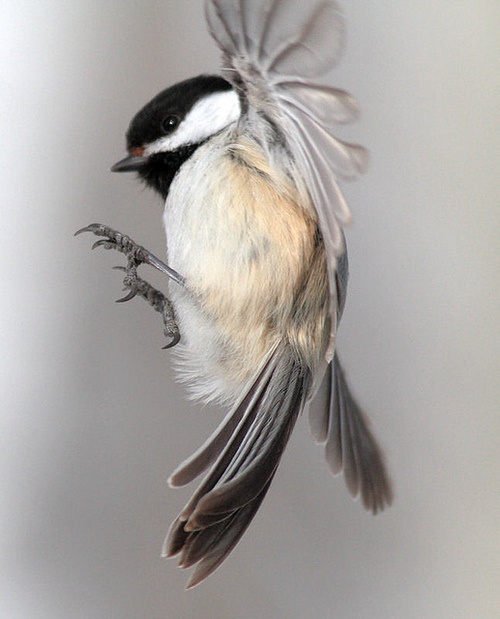
Black-capped Winged Wonder  
...this BC Chickadee was starting to launch...
 
 
Chickadee on the Wing...  
... a study in aerodynamics of landing... uber fast shutter speed used to stop the action.


Common Redpoll  
I've noticed a hoard of redpolls feeding feverishly around both feeders at Fort Whyte, with yesterday being the most that I've seen. Sunday was family day and with the warmer weather, you needed to hit the trails that were less frequented by the masses.


 Golden-crowned Kinglet
Reached into my October archives to pick these shots of the migrating Golden-crowned Kinglets that have already left south from here a while ago.


Hoary Redpoll m. (Acanthis hornemanni)
I wanted to post these three bird shots, I've way too many to post...!! This first, I believe, is a Hoary Redpoll, male.


Leucistic Yellow-rumped Warbler
This Leucistic Yellow-rumped Warbler was observed catching flying insects with a group of regular Yellow-rumped Warbler species yesterday morning at Fort Whyte. (Leucism)


 Pine Grosbeak Takes Flight...  
... captured in the midst! I really liked the way the wings and feathers turned out in this shot... surprised with the details.


Red-breasted Nuthatch
One of my favourite little birds in winter.


Ruby-crowned Kinglet
Bird photographers treasure the capture of the red crown on this Ruby-crowned Kinglet as it is rarely displayed. I was quite delighted with getting these shots.


Townsend's Solitaire
I've posted some further shots, for identification purposes, of the Townsend's Solitaire that's been sighted by an increasing number of birders here in our city, in the last few weeks. Their normal territory is along the higher mountainous elevations along the west coast of Canada, preferring the tall coniferous tree environments. A long way from home and on flat prairie, in the middle of our winter here. Although he's in for a treat and surviving more likely by finding food (European Buckthorn berries) and shelter and our very mild winter so far!

On this day, this one was especially friendly as he approached me with curiousity, and followed on the trail as I walked about.


Yellow-rumped Warbler
A male Yellow-rumped Warbler in spring breeding colours.


Birding often involves a significant auditory component, as many bird species are more easily detected and identified by ear than by eye. Most birdwatchers pursue this activity mainly for recreational or social reasons, unlike ornithologists, who engage in the study of birds using more formal scientific methods.


Many many more gorgeous bird photos if you click prairiedog (in and out)'s photostream / Tags / bird @ flickr.com


And many many many more widlife photos if you click prairiedog (in and out)'s photostream @ flickr.com


02 March 2013

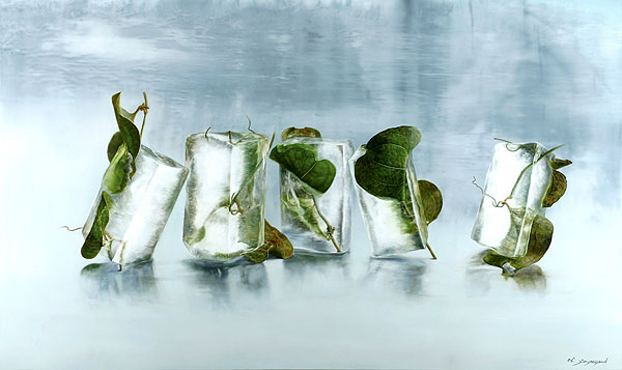
Ice world of warmth

The encounter of green plants with ice sculpture, depicted in oil paintings: Sung Min Park made that happen.


Ice capsules by Park, Sung Min: a memory storage for three stages of material

« For those who first met Park, Sung Min's work may misunderstand as Park's art is cold due to the preconception that ice means cold. However, you may not spend much time to realize Park's ice has warm energy if you pay more attention and give some affection to his work.

The attractions of his art are liveliness and freshness of life that stood out from coldness. As if the most splendid and climaxed vitality is captured in the ice, joy and smile in life will be found full.

I wonder what Park, Sung Min's art world is that invites us to an ice world of warmth.»


– Words from Kim, Yoon Sup: art critic, editorial director of monthly magazine Art Price


To read more.


22 February 2013

Fabric and flesh

Girl Arranging Flowers (1921)


Be pleased to meet some beautiful and bright paintings from this American Impressionist painter, born in Baltimore: William McGregor Paxton (1869 – 1941).


William McGregor Paxton is well known for his extraordinary attention to the effects of light and detail in fabric and flesh. His compositions were most often idealized young women in beautiful interiors.

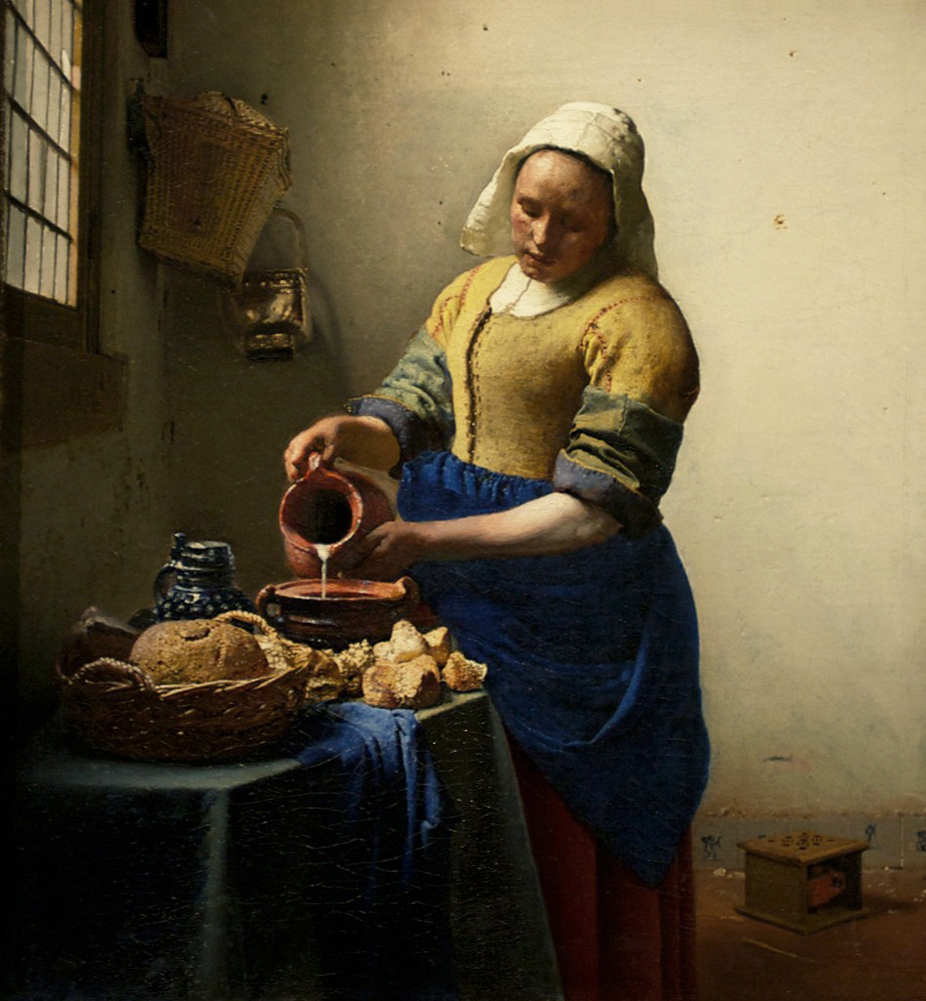
Like many of his art colleagues, he found inspiration in the work of the 17th century Dutch painter Johannes Vermeer.


Johannes Vermeer: The Milkmaid (circa 1657-58)

William McGregor Paxton was fascinated not only with Vermeer's imagery, but also with the system of optics he employed.

He studied Vermeer's works closely, and discovered that only one area in his compositions was entirely in focus, while the rest were somewhat blurred.

William McGregor Paxton ascribed this peculiarity to binocular vision, crediting Vermeer with recording the slightly different point of view of each individual eye that combine in human sight.


The New Necklace

Paxton began to employ this system in his own work, including The New Necklace, where only the gold beads are sharply defined while the rest of the objects in the composition have softer, blurrier edges.


Nude

This effect is even more noticeable in his 1915 painting entitled Nude, which shows a young woman seated on a blue dress that is spread across the seat of a backless divan.

The woman is shown leaning slightly to the right, reaching for a pink undergarment. The figure is viewed from an angle that is midway between a back view and a right side view.

All objects in the painting are slightly blurred with the exception of the woman's one visible breast (the right one) and parts of her right arm.

•

 Dejeuner Venice (1910)


 Girl Sweeping (1912)


 Girl Combing Her Hair (1909)


 Glow of Gold, Gleam of Pearl (1906)


 Interior with Two Nude Models


 The Blue Cup (1909)


 The Figurine (1921) 


 The Escape


 Morning Light


The Housemaid (1910)

 •

William McGregor Paxton crafted his elaborate compositions with models in his studio. And the props he used appear in several different paintings.

He was working on his last painting (a view of his living room, with his wife posing for him) when he was stricken with a heart attack and died at the age of 72.


15 February 2013

J'ai trouvé un peintre de requin.

Richard Ellis is currently recognized as a foremost artist of marine and natural history subjects.


Whale Shark


« From his youth spent on the beaches of Long Island USA, Richard Ellis, born in 1938, has been deeply involved with the sea and the animals that live in it.

As a marine biologist, he brings to his art a unique respect and understanding for the ocean.

In order to portray the fishes, whales and sharks that he does well, he has studied them from every vantage point.

Trained as a scuba diver [oh yeah] and an underwater photographer, Richard Ellis has spent hundreds of hours in, on, and under the ocean, in search of his subjects and the accurate representation of their environment.

 Hours of painstaking research go into each painting, so that his work is not only scientifically accurate, but strikingly beautiful as well.

For him there is no distinction between art and illustration. [Interesting.]

A painting done to illustrate a magazine article will often end up in a prestigious private collection or in a museum.

Because his work is so precise, it has been used to fulfill the demanding requirements of scientific papers, but his sense of the quality of luminescent underwater light and composition are so dramatic that his paintings transcend illustration and become art in its purest sense.

In 1974, Richard Ellis spent one year researching the ten paintings of the great whales that would win him world-wide recognition. These paintings, done for Audubon magazine, are considered the most moving and accurate pictures of whales ever done.

Richard Ellis is an author as well as an artist. He has written dozens of scientific and popular magazines. He is also the author and illustrator of The Book of Sharks.»


Info source: ro gallery

 Bull Shark (1977)


 Great White Shark (1991)


 Carcharias taurus


 Greenland Shark (Somniosus microcephalus)


 Porbeagle Shark (Lamna nasus)


 Chain Dogfish Small Shark


 Great White Shark Portrait


 Tiger Shark


I've never had the fantasy to go underwater to see sharks. But if the mood took me, I would dress like this:

 An old dive suit: Coolest submarines showcase